Is A Delos Cruise Cancelled When It Is Windy?
What actually happens when the meltemi blows and a Delos and Rhenia cruise cannot sail: cancellation windows, refund terms and how to plan around sea conditions.
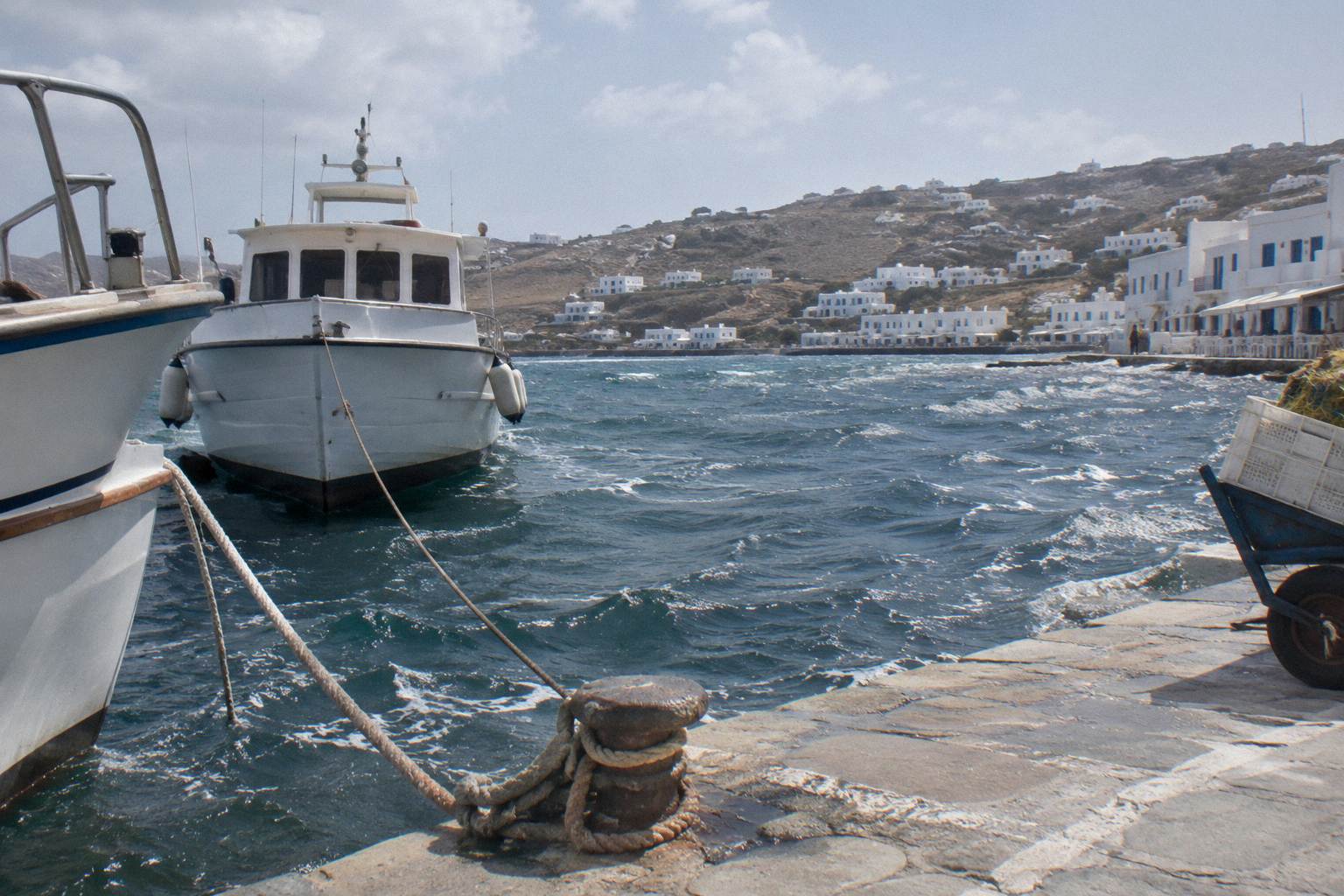
Yes, sometimes. Boat trips from Mykonos to Delos and Rhenia depend on sea conditions, and when wind makes the crossing unsafe the operator can cancel or cut the route short. The free cancellation up to 24 hours before departure shown on most listings here is your own cancellation window, not a weather promise, and no tour row we researched publishes a wind threshold or a guaranteed weather refund, so check the operator's terms before you pay.
The crossing from Mykonos Old Port to Delos takes about 30 to 40 minutes in open water, and the Cyclades are a windy part of the Aegean. That combination means cancellations are a real possibility at any time of year, not a rare edge case. The honest answer is that nobody selling these cruises can guarantee sailing on a given day, and any listing that implies otherwise should be read carefully.
What we can tell you is what the products themselves say. The Rhenia Cruise With Lunch by Aegean Ventures Mykonos, the most reviewed tour on this site at 4.6 across 1,764 reviews, lists free cancellation with a 24 hour window. The Budget Half-Day Guided Tour by Delos Travel, from €60 per person, states the same window. Those terms let you cancel yourself up to a day ahead, which is exactly the point at which a weather forecast starts to become useful. There is more detail on picking between formats in our guide to Delos half-day tours versus full-day cruises.
This is also where booking flexibility becomes a planning decision rather than a footnote. A traveller with three days on Mykonos can absorb one lost departure; a traveller on a single overnight cannot. We cover that trade-off, and how much time the site itself deserves, in the piece on how long you should spend on a Delos tour.
Who Decides If A Delos Boat Trip Sails?
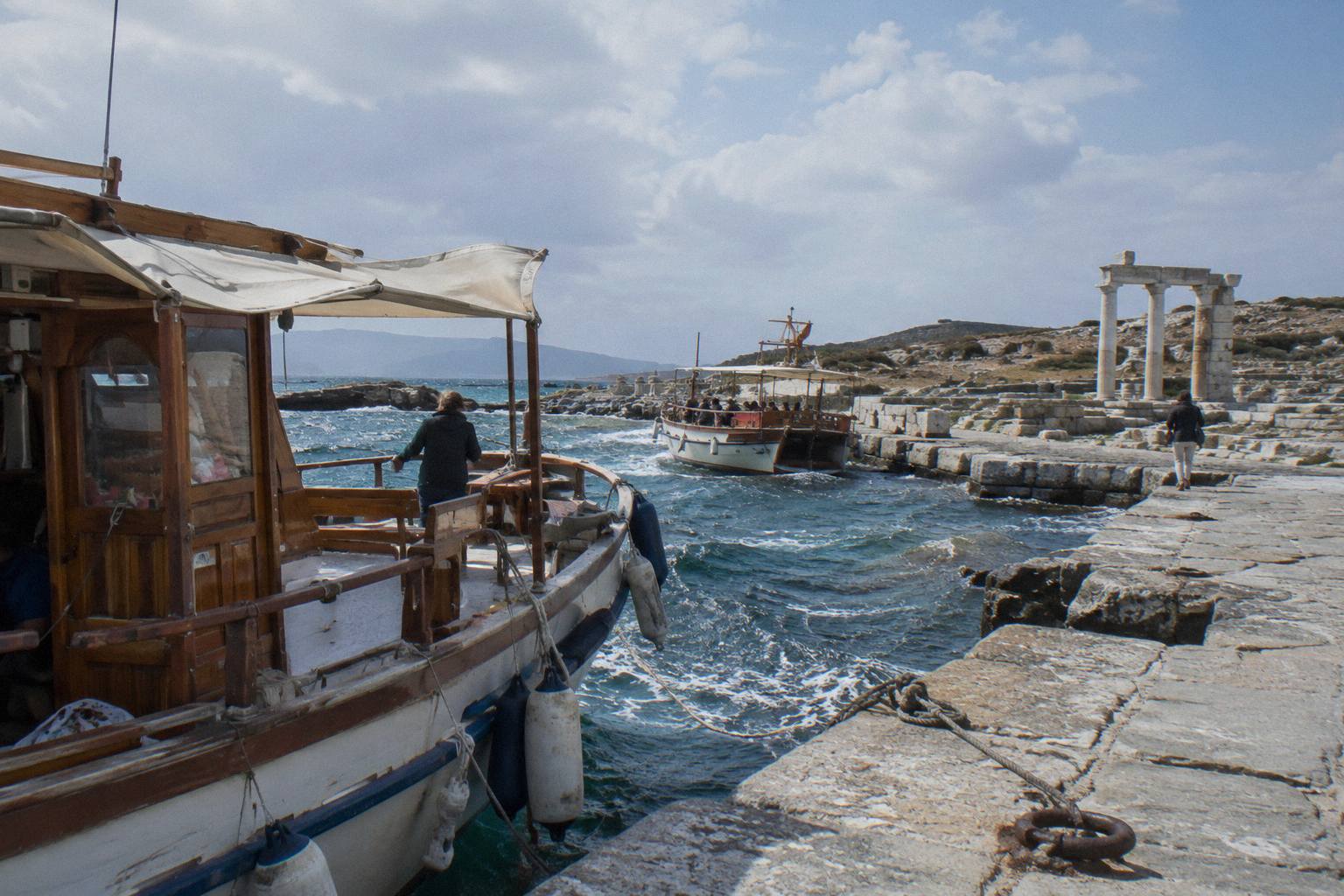
The decision sits with the captain and the operator, not the booking platform and not the archaeological site. Greek maritime rules put responsibility for passenger safety on the vessel's master, who judges the conditions at departure time. If the port authority restricts movements or the captain judges the sea state unsafe for the boat and route, the trip does not go, regardless of what your ticket says. Delos itself being open is irrelevant if no boat can land there.
This is worth understanding because it explains why cancellations are often last minute. A day can look calm over Mykonos town and still be rough on the open stretch between the island and Delos, and the captain is the only person on the day with the full picture. Operators on this route run daily in season, so they read the sea constantly and would rather cancel one departure than have a boat full of seasick passengers who cannot disembark at the ancient harbour.
The site's own conditions add a second layer. The Archaeological Museum and the ruins on Delos sit in an exposed position with almost no shelter and no accommodation of any kind; the island has been uninhabited since the 7th century AD and is a protected archaeological zone, listed by UNESCO as a World Heritage site since 1990. There is nowhere to wait out a squall in comfort and no way to leave except the boat you came on. Landing itself requires reasonably settled water at the ancient harbour, which is why a modest wind that would not trouble a large ferry can still stop a small sailing boat or catamaran.
A useful practical consequence: the smaller and more open the vessel, the more sensitive the departure is to conditions. A big motor cruiser tolerates more sea than a sailing yacht; a sunset sailing trip with a swim stop at Rhenia needs calmer water than a plain transfer. Format matters for wind risk, not just for comfort, which is one more reason the choice between guided and self-guided Delos options deserves a moment of thought before you book.
What Do The Cancellation Terms Actually Promise?
Most listings on this site state free cancellation up to 24 hours before departure. That clause protects you if you change your plans, and it usually means a full refund if the operator cancels outright, but the wording differs between products and you must read the specific booking page. No row we researched publishes a wind threshold, a weather-specific refund policy or a guaranteed reschedule. Never assume a refund the operator's terms do not spell out.
Here is the distinction travellers most often miss. "Free cancellation up to 24 hours" is your right to pull out. "The operator cancelled because of wind" is a different event, and what follows from it, refund, rebooking onto a later departure, or nothing at all, is governed by the operator's terms of service, not by your free-cancellation window. Reputable operators on this route do refund or rebook when they cancel, and many reader reviews describe exactly that happening, but a promise in prose here would be a promise the listings do not make.
The table below sets out what the main product types on this site actually print about cancellation, so you can see at a glance where the printed terms stop and the unknown begins.
| Product type | Printed cancellation term | Weather refund promise | Delos ticket handling |
|---|---|---|---|
| Shared Delos and Rhenia cruises (e.g. Rhenia Cruise With Lunch, from €88) | Free cancellation, 24 hour window | Not stated | Included on this row; extra on most others |
| Guided half-day tours (e.g. Budget Half-Day Guided Tour, from €60) | Free cancellation, 24 hour window | Not stated | Check the row; most guided rows include it |
| Private charters (e.g. Private Cruise, BoatsAdvisor, from €1,400 per boat) | Not stated on every row | Not stated | Listed as an extra on this row |
| Boat transfer only (35-Minute Boat Transfer Only, from €29) | Free cancellation, 24 hour window | Not stated | Extra, €20 full / €10 reduced |
The safest structure is to minimise what you prepay for a wind-exposed day. If you buy the Delos entrance ticket separately, do it through the official channel: the Ministry of Culture's ticket page for Delos gives the current €20 full and €10 reduced rates, and some third-party listings still quote an outdated €12 figure that is no longer the official rate. If the crossing is cancelled, an unbundled ticket bought in error is your own loss, while a bundled one is at least covered by whatever the operator's terms say.
Check the operator's live listing for whichever product you are considering, and read the cancellation section rather than the headline. The difference between "free cancellation" and "full refund or date change if the operator cancels" is the whole ballgame on a windy week. For a deeper walk through what is and is not bundled, see what is included in a Delos and Rhenia cruise.
When Is Wind Most Likely To Disrupt The Crossing?
The Cyclades are windiest in high summer, when the prevailing northern meltemi blows hardest in July and August, and calmer in late spring and early autumn. No operator on this site publishes wind statistics for the Mykonos to Delos route, and we will not invent them, but the pattern is well known enough that travellers with flexible dates often prefer May, June, September or October. Even then, an exposed crossing can be lost to a single rough day.
The planning logic is not to avoid summer entirely, since most departures still run, but to build slack into the itinerary. If the Delos visit is the centrepiece of your trip, give yourself two or three candidate mornings rather than one, and watch the forecast from a day out. Our guide to the best time of year and day for a Delos tour goes into the daily rhythm in more detail, but the short version is that a morning slot at the start of your stay leaves room to retry, while a slot on your last day does not.
Time of day matters too, and for a structural reason rather than a statistical one. Sea breeze typically builds through the morning and peaks in the afternoon, which is why afternoon and sunset sailings are, in plain physical terms, the departures most exposed to a freshening wind. The Sunset Cruise With Dinner by Sunfos Alessia Yachting, from €115 per person and rated 4.7 across 119 reviews, is a lovely product in calm conditions, but it sails in the part of the day when the water is most likely to be moving. If wind worries you, an early departure is the lower-risk bet. The rest of the planning pages sit on Delos Tours Greece.
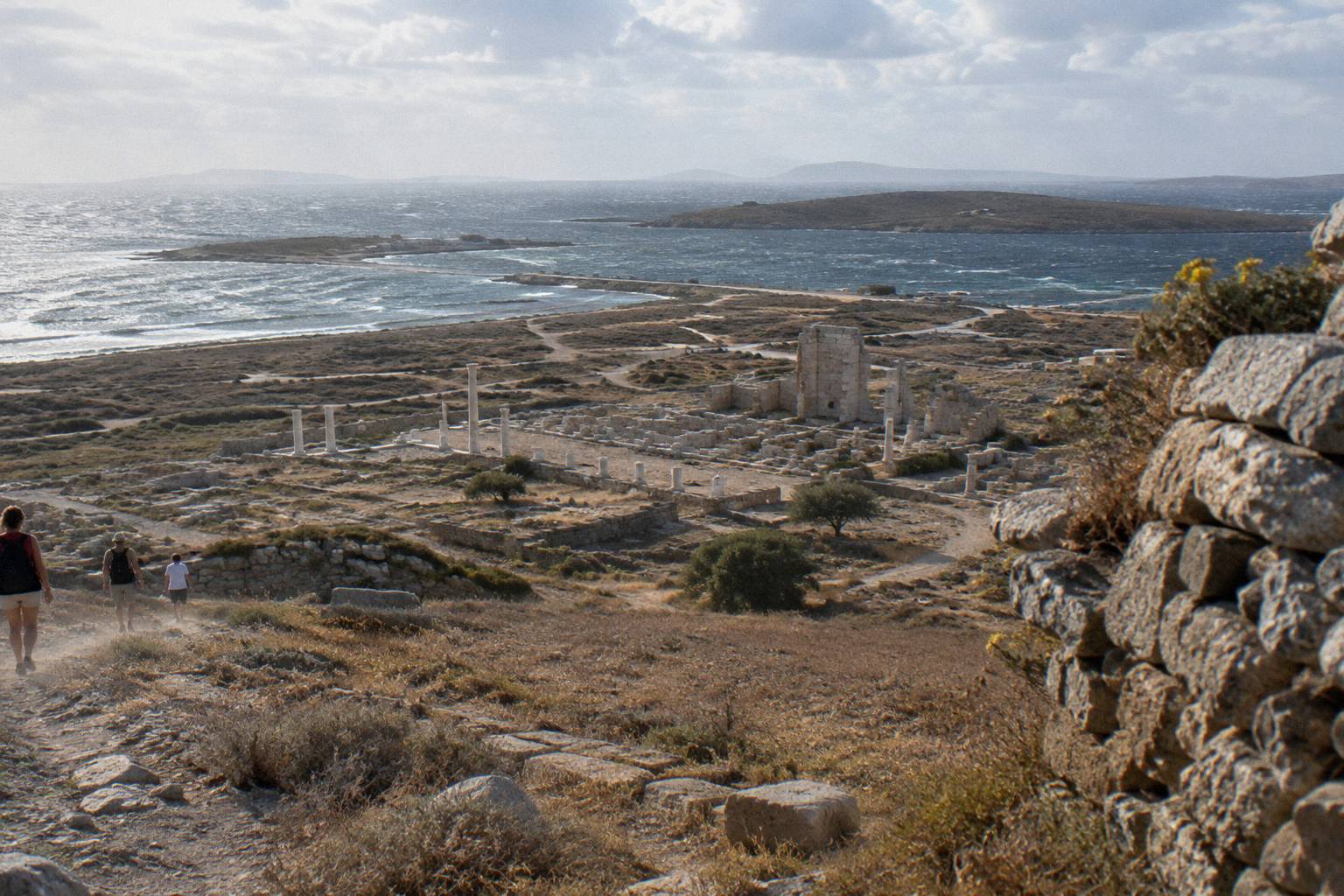
There is also a difference between wind that cancels a trip and wind that merely degrades it. A crossing that runs in a moderate breeze can still be choppy enough to make the sail uncomfortable, and travellers prone to seasickness should treat that as a separate consideration from cancellation. The boat operators themselves are the best source for day-of information; the local ferry operator Delos Tours publishes its Mykonos to Delos services and is reachable on the day if you want to confirm a departure before walking down to the Old Port.
What Happens On The Day If Your Cruise Is Called Off?
In most cases the operator contacts you the evening before or the morning of departure, by message or phone, and offers either a refund or a place on the next available sailing. You will not be left guessing at the dock if your booking includes current contact details, so make sure it does. A bundled product is handled in one conversation; a separate Delos site ticket is yours to deal with independently.
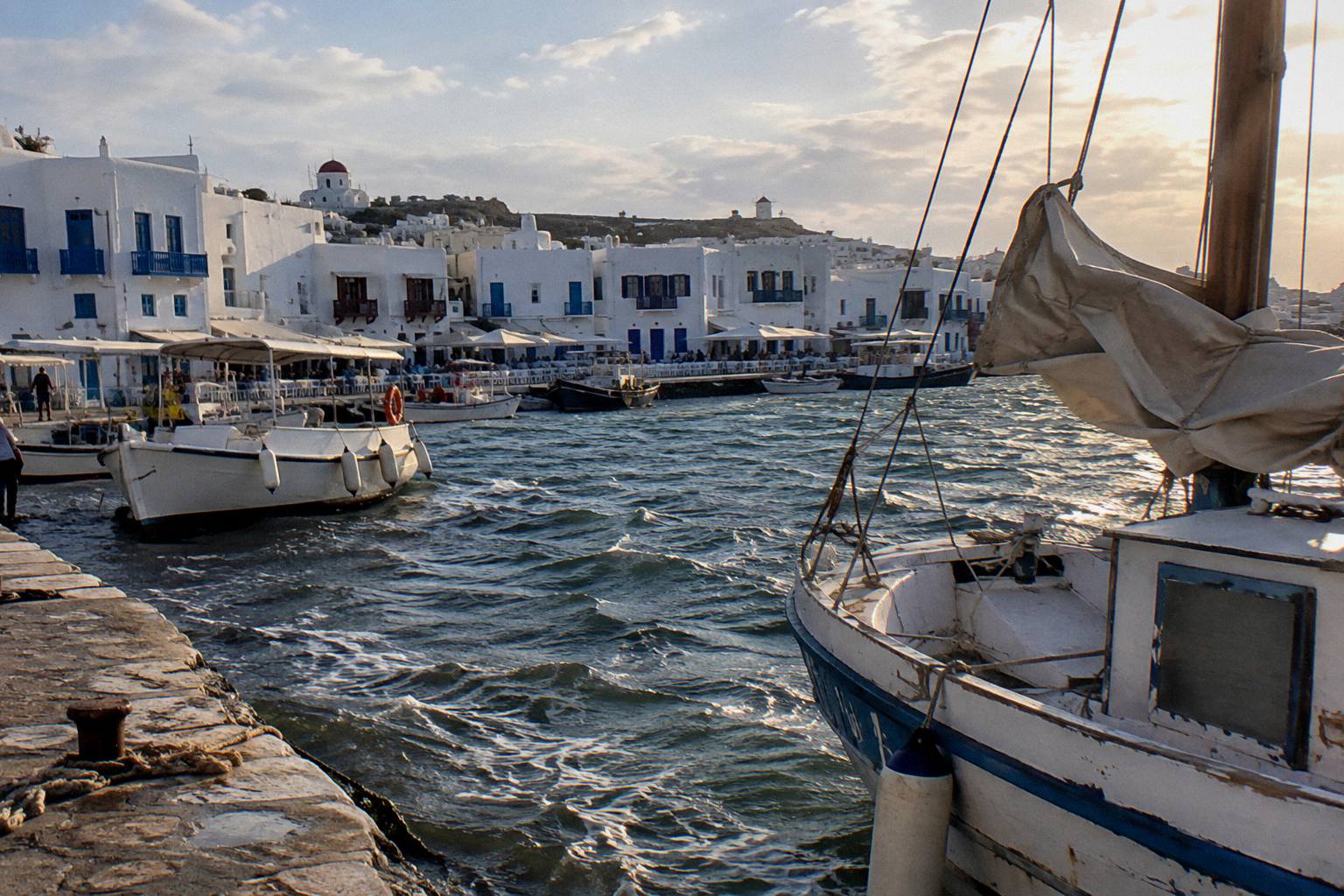
The practical routine is simple. The night before, check your booking channel and your phone for messages. The morning of, if you have heard nothing and the harbour looks rough, call the operator's published number before you walk to the port. Do not assume silence means the trip is running, and equally do not assume whitecaps in the bay mean it is off: the decision is made by the captain on conditions at departure time, and boats do sail in weather that looks dramatic from the shore.
One detail that catches people out: the departure points are not interchangeable. Mykonos Old Port and the New Port at Tourlos are different places, and most cruise rows on this site list both as pickup areas while the Rhenia Cruise With Lunch lists only the Old Port. If you are rebooked onto a different departure, confirm which port it leaves from, because a last-minute scramble between the two is its own small disaster. Our overview of Mykonos to Delos ferry and tour boat options explains who sails from where.
If the trip is cancelled and you cannot be rebooked, the day is not wasted. Delos itself may be unreachable, but the question of whether you can still salvage the visit, and under what conditions, is covered in our article on visiting Delos without a tour. Sometimes the plain transfer runs when the cruise boats do not, because the route and vessel differ.
Can You Reduce The Risk Before You Book?
Yes, in three ways: choose a product with free cancellation, keep your booking early in your stay so a retry is possible, and avoid prepaying for extras that a cancelled boat cannot deliver. Every cruise row we researched carries the 24 hour free-cancellation window except a handful of private charters that print no cancellation term at all; those are the least flexible options on a windy forecast.
The first lever is product choice. Shared cruises on this site, such as the BBQ, Drinks And Transfer Included cruise by Luxury Yachting Greece (from €145 per person, rated 4.9 across 278 reviews) or the All Inclusive, Free Transportation cruise by Mykonos Sea Excursions (from €137 per person, rated 4.9 across 261 reviews), both state free cancellation up to 24 hours before. That window aligns neatly with forecast reliability: at 24 hours out, wind predictions for the Aegean are good enough to make a sensible call yourself rather than waiting for the captain to make it for you.
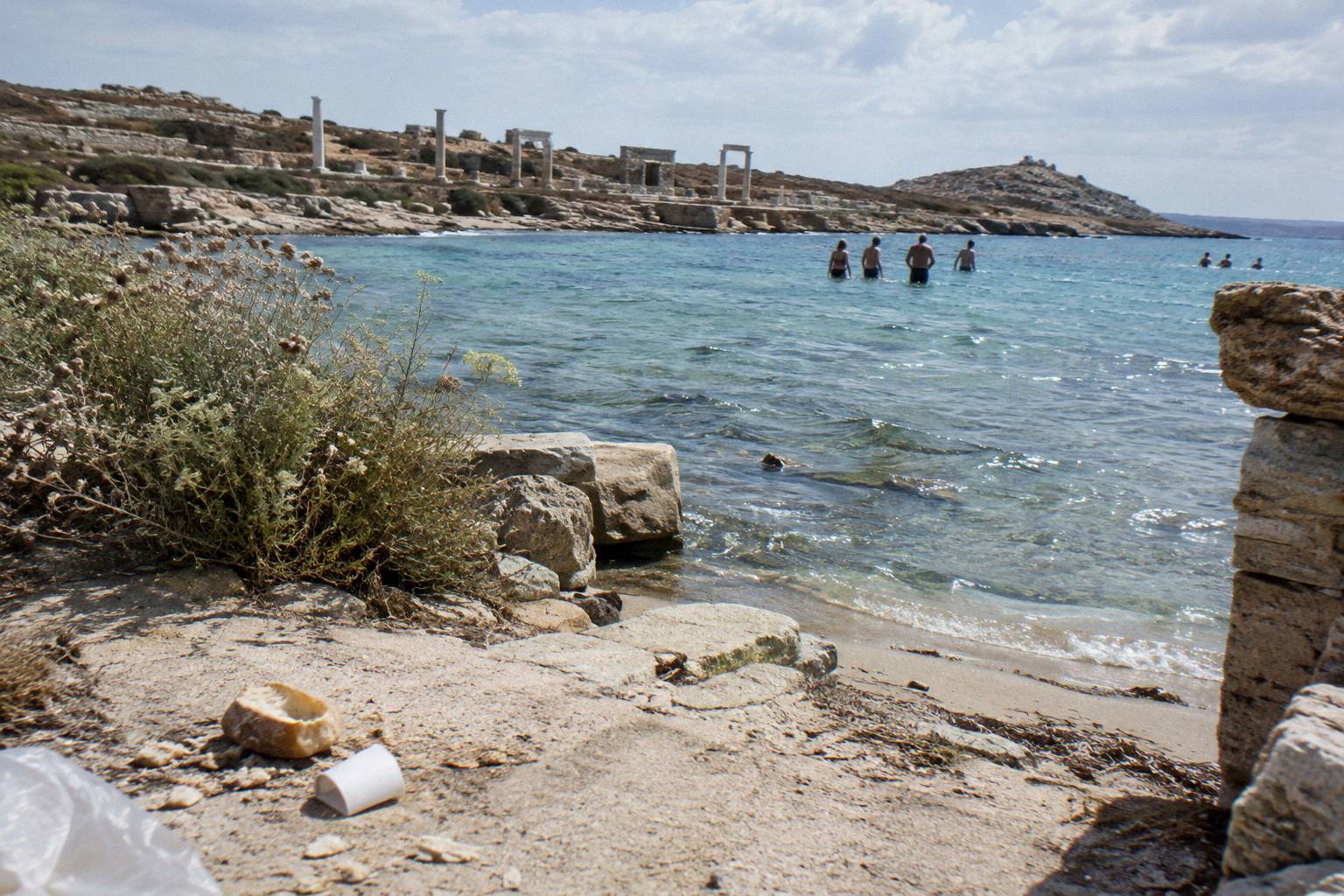
The second lever is scheduling. Book the cruise for day two or three of your stay, not your final day. If the wind wins, you rebook with a day to spare; if it does not, you have lost nothing. Travellers on a cruise-ship stop at Tourlos have no such slack, which is why our guide to Delos shore excursions from the Mykonos cruise port recommends the tightest, earliest options for passengers on a clock.
The third lever is what you bundle. A product that includes the Delos ticket, like the MTM Guided Day Trip from €101 per person, means one cancellation covers everything. A product that lists the ticket as an extra, which is the majority pattern on this site (26 of 45 rows), means two moving parts on a windy day. Neither is wrong, but know which one you have bought. You can compare the live options and check availability before committing, and read the cancellation section on the operator's live listing rather than skimming the headline price.
Does A Cancelled Delos Day Mean A Lost Day On Mykonos?
No. A wind cancellation costs you the boat trip, not the holiday, and the conditions that stop small boats to Delos rarely close Mykonos itself. If the sea is too rough for the crossing, take the refund or rebooking, spend the day inland or in Mykonos town, and sail the following morning when conditions often ease. Travellers who plan a retry day lose almost nothing; those who scheduled Delos on their last afternoon do.
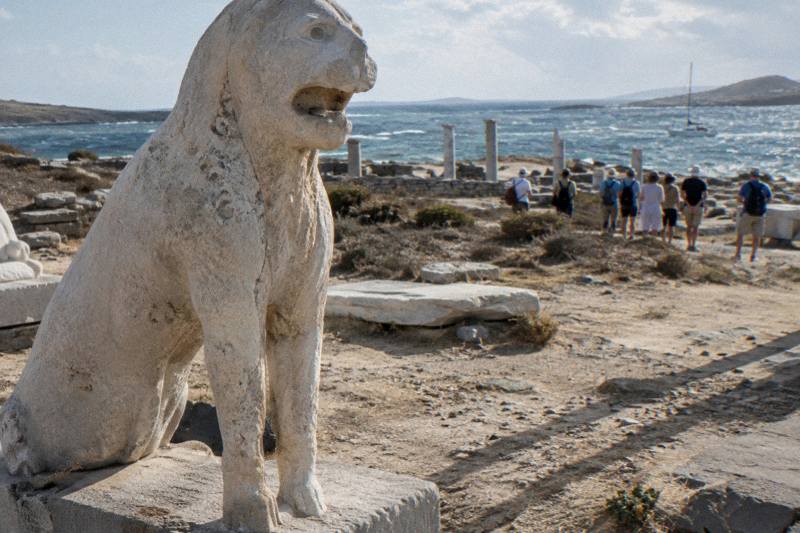
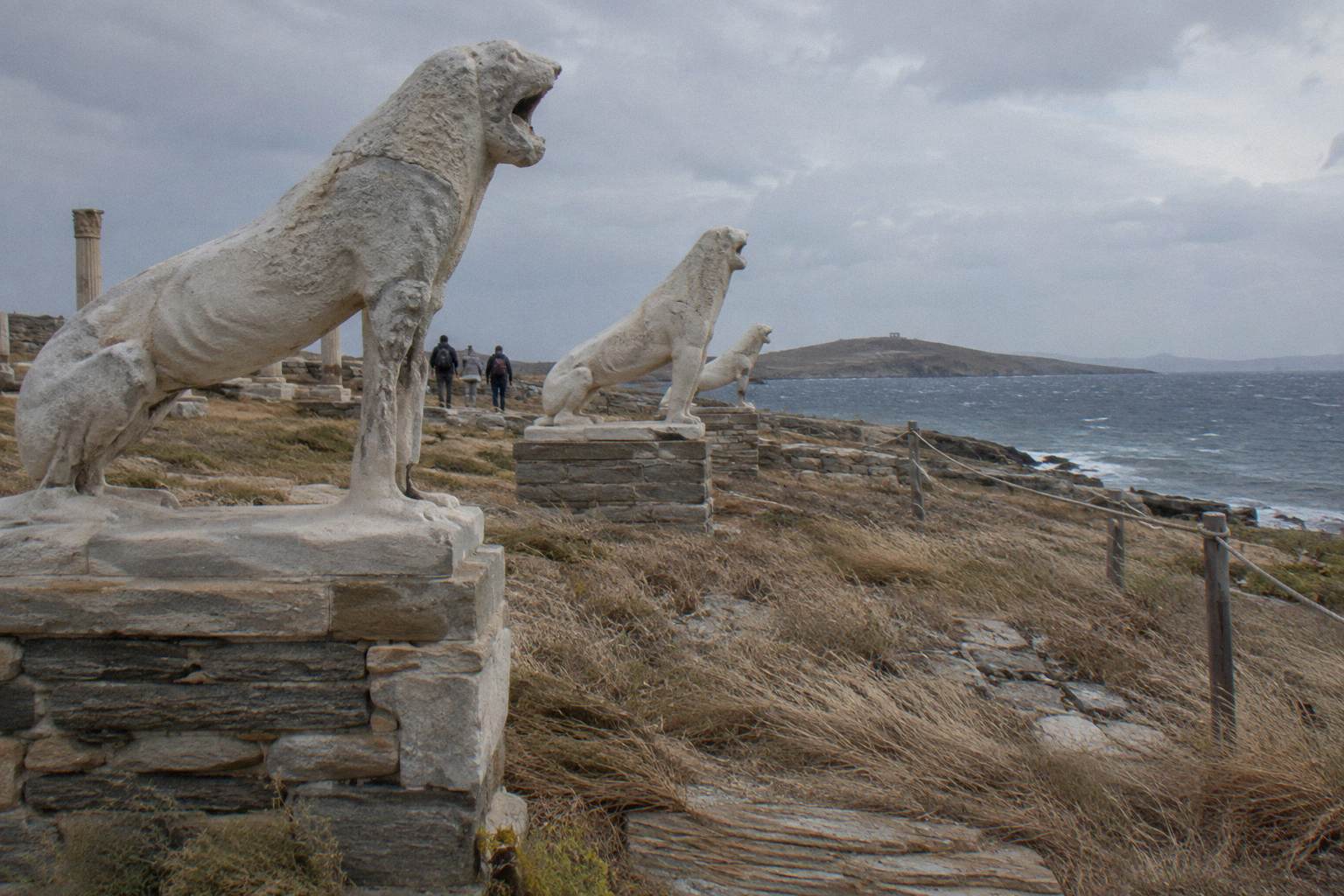
It helps to know what you are protecting. Delos is no ordinary stopover: legend says Apollo and Artemis were born there, the Delian League kept its headquarters on the island, and the Naxian Lions, erected in the late 7th or early 6th century BC, still stand guard above the Sacred Lake, which is dry today; the lions on the terrace are exact replicas, with the originals kept in the Archaeological Museum since 2000. The Ephorate of Antiquities of the Cyclades describes a site that rewards a full, unhurried visit rather than a rushed shore call squeezed between wind gusts. A retry on a calm day is genuinely the better experience.
Two site rules also interact with weather planning. Nobody may stay overnight on Delos; it is an uninhabited archaeological site with no accommodation, so there is no option to wait out bad weather on the island. And swimming is forbidden off the coast of Delos itself; the swims on the cruise rows happen at Rhenia, the neighbouring island where boats anchor in sheltered coves. That means a cruise cut short by wind usually loses the Rhenia swim first, while the Delos landing, the part most travellers came for, often survives. If wind is marginal, this is a reasonable outcome rather than a write-off, and the difference between the two islands is unpacked in our guide to what happens on a Delos and Rhenia cruise day.
Finally, keep the Delos site facts in your back pocket for the retry. The ticket is €20 full and €10 reduced, the museum on the island is covered by it, water vending machines exist only at the port and the museum, and there are free admission days (6 March, 18 April, 18 May, the last weekend of September, 28 October and every first Sunday from 1 November to 31 March) that can turn a rebooked visit into a cheaper one. The site also closes entirely on 1 January, 25 March, 1 May, Easter Sunday and 25 and 26 December, dates worth knowing if your trip sits near a holiday.
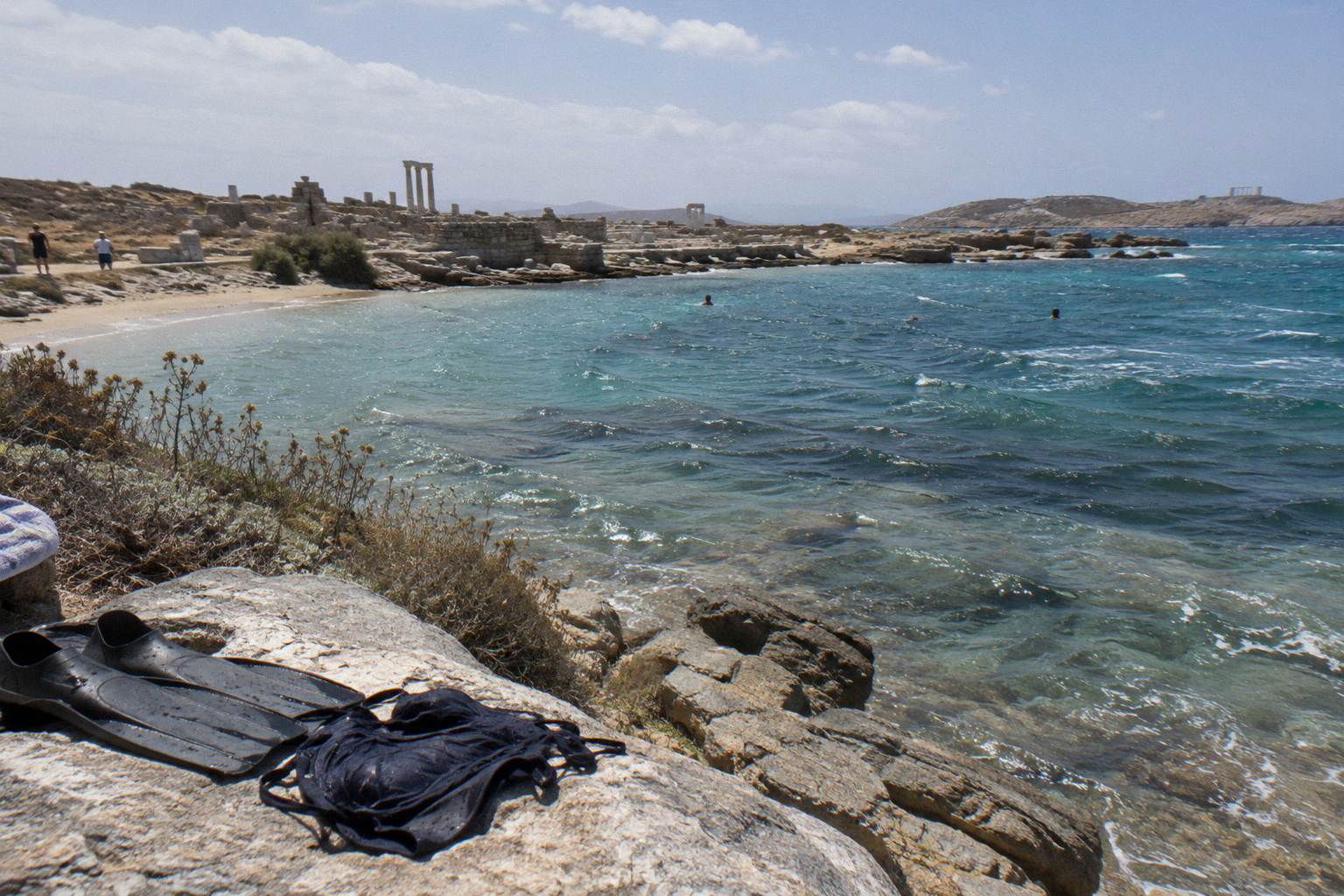
Delos Tours Greece publishes this research so you can plan around the Aegean rather than be surprised by it, and the wind question is the single most common worry readers bring us about this route.
Common Questions About Wind And Delos Cruises
Is A Delos Cruise Cancelled When It Is Windy?
Sometimes, yes. The Mykonos to Delos crossing is an exposed 30 to 40 minute run, and the captain cancels when conditions are unsafe. Most listings state free cancellation up to 24 hours before departure, but no row publishes a weather-specific refund promise, so read the operator's booking terms before paying.
Do I Get A Refund If The Operator Cancels For Wind?
No listing on this site prints a weather refund policy. Reputable operators on this route typically refund or rebook when they cancel, but the guarantee, if any, lives in each operator's own terms of service, not in the free-cancellation window, which only covers cancellations you make yourself.
How Far In Advance Will I Know If My Cruise Is Cancelled?
Usually the evening before or the morning of departure. The decision rests with the captain on conditions at departure time, so last-minute cancellations do happen. Make sure your booking holds a working phone number, and call the operator before walking to the port if the harbour looks rough and you have heard nothing.
Which Delos Tours Are Most Likely To Be Affected By Wind?
Smaller and more open vessels, and afternoon or sunset departures when the sea breeze is strongest. The plain boat transfers and early-morning shared cruises are the least exposed options; a large part of the day's risk is simply the time of day you sail.
What Happens To My Delos Entrance Ticket If The Boat Is Cancelled?
The Delos site ticket (€20 full, €10 reduced) never includes the boat fare, so a ticket you bought separately is not automatically refunded by a cruise cancellation. On the 26 tour rows that list the ticket as an extra, it is a separate purchase; on the 4 rows that include it, it is handled with the booking.
Can We Still Swim If The Cruise Is Cut Short By Wind?
Often the Rhenia swim stop is the first thing dropped when conditions deteriorate, since swimming is forbidden off Delos itself and the swims happen in Rhenia's sheltered coves. A shortened cruise that still lands on Delos is a common and reasonable outcome on a marginal day.